Phenethylamines
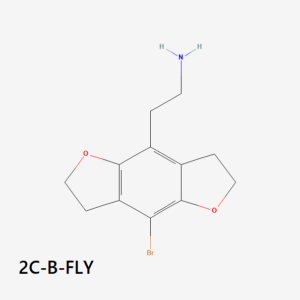
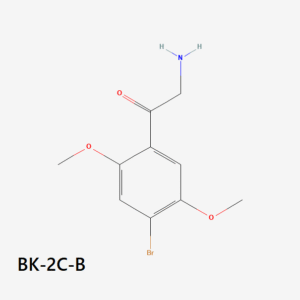
Sourcing legal phenethylamines for sale online? We have an exceptional lists of high power psychedelic research chemicals like 2C-B-FLY and BK-2C-B from our trusted RC Shop — NNRCHEM with overnight shipping in USA, Canada and EU. No “customs” or “hidden fees”.
Phenethylamines constitute one of the largest and most structurally diverse classes of psychoactive and pharmacologically active compounds encountered in forensic, toxicological, and pharmaceutical research. All materials in this category are supplied exclusively as high-purity analytical reference standards intended for use in accredited laboratories.
What are phenethylamines?
Phenethylamines are characterized by a core structure consisting of a benzene ring attached to an ethylamine chain (β-phenylethylamine). This scaffold serves as the foundation for a wide variety of natural, semi-synthetic, and fully synthetic derivatives.
The parent compound, β-phenylethylamine (PEA), is a trace endogenous monoamine found in mammals and certain foods. Substitution on the aromatic ring (especially positions 2, 3, 4, 5) and/or on the nitrogen atom or α-carbon produces compounds with dramatically different pharmacological profiles, receptor affinities, metabolic fates, and analytical behaviors.
Natural and endogenous phenethylamines
Several phenethylamines occur naturally:
- β-Phenylethylamine (PEA) — trace biogenic amine
- Tyramine (4-hydroxy-PEA) — found in fermented foods and trace amine
- Dopamine (3,4-dihydroxy-PEA) — major catecholamine neurotransmitter
- Norepinephrine / Noradrenaline (3,4-dihydroxy-α-methyl-PEA derivative)
- Epinephrine / Adrenaline (N-methyl derivative)
- Mescaline (3,4,5-trimethoxy-PEA) — naturally occurring in certain cacti (Lophophora, Trichocereus / Echinopsis spp.)
Major classes of synthetic and semi-synthetic phenethylamines
Analytical reference libraries commonly include the following structural families:
2C series (2,5-dimethoxyphenethylamines)
- 2C-B (4-bromo-2,5-dimethoxyphenethylamine)
- 2C-I (4-iodo-2,5-dimethoxyphenethylamine)
- 2C-E (4-ethyl-2,5-dimethoxyphenethylamine)
- 2C-T-2, 2C-T-7, 2C-C, 2C-D, 2C-P, 2C-N, etc.
DOx series (2,5-dimethoxy-4-substituted amphetamines)
- DOM (2,5-dimethoxy-4-methylamphetamine)
- DOB (4-bromo-2,5-dimethoxyamphetamine)
- DOI (4-iodo-2,5-dimethoxyamphetamine)
- DOC, DOET, DON, etc.
NBOMe series (N-(2-methoxybenzyl)phenethylamines)
- 25I-NBOMe (4-iodo-2,5-dimethoxy-N-(2-methoxybenzyl)phenethylamine)
- 25B-NBOMe, 25C-NBOMe, 25D-NBOMe, 25E-NBOMe, 25N-NBOMe, etc.
Substituted amphetamines and cathinones (often classified separately but structurally related)
- Amphetamine, methamphetamine
- MDMA (3,4-methylenedioxymethamphetamine)
- MDA, MDEA
- PMA, PMMA
- Cathinone derivatives (see separate cathinones category for more detail)
Other notable phenethylamines
- 3C series (2,5-dimethoxy-4-substituted phenethylamines with α-methyl group)
- 4-Substituted 2,5-dimethoxyphenethylamines without N-benzyl (e.g., 2C-B-FLY, 2C-B-Butterfly)
- Benzodifurans (e.g., Bromo-DragonFLY)
- PMMA / 4-MTA
- 4-FA, 4-FMA, 4-FA analogs
Legitimate scientific and analytical applications
Certified phenethylamine reference standards are critical for:
- Development and validation of targeted and untargeted LC-MS/MS, GC-MS, and HRMS methods
- Identification and confirmation in seized materials (powders, tablets, blotters, liquids)
- Quantitative toxicological analysis in biological matrices (blood, serum, urine, oral fluid, hair, tissues)
- Metabolic studies and identification of phase I and II metabolites
- Pharmacokinetic profiling
- Receptor binding and functional assays (primarily 5-HT₂A, 5-HT₂C, dopamine transporters, monoamine transporters)
- Preparation of calibrators, quality control materials, and proficiency testing samples
- Stability and degradation studies (especially relevant for NBOMe compounds and certain 2C/ DOx analogs)
Regulatory status and compliance requirements
The majority of psychoactive phenethylamines are controlled substances in most jurisdictions:
- United States — Schedule I (most 2C, DOx, NBOMe, MDMA, MDA, mescaline, etc.)
- Canada — Schedule III or I depending on compound
- European Union — controlled under national laws; many NBOMe, 2C, and DOx compounds are listed or fall under NPS legislation
- United Kingdom — Class A (most potent hallucinogenic phenethylamines)
- Australia, Japan, China, Russia, South Korea — prohibited or heavily restricted
All products are supplied strictly for research, forensic, toxicological, and analytical purposes only. They are not intended for human or veterinary consumption, diagnostic use, therapeutic application, or any form of in-vivo administration. Purchasers must hold all required licenses, permits, and authorizations under applicable controlled substances and precursor chemical regulations.
Quality standards for phenethylamine reference materials
Reputable suppliers provide:
- Purity typically ≥98–99.9% (HPLC, qNMR)
- Full certificate of analysis including identity (NMR, HRMS, IR, UV), purity, and batch-specific data
- Isotopically labeled internal standards (e.g., 25I-NBOMe-d₉, 2C-B-d₆, MDMA-d₅)
- Documentation of regioisomer and positional isomer purity (critical for 2,4,5- vs 2,5,6- isomers, etc.)
- Recommended storage conditions (usually −20°C or −80°C, light and moisture protected)
- Stability data for parent compounds and common degradants
Commonly requested phenethylamines in modern analytical laboratories
- 2C-B
- 2C-I
- 2C-E
- 25I-NBOMe
- 25B-NBOMe
- 25C-NBOMe
- DOM
- DOB
- DOI
- MDMA
- MDA
- Mescaline
- 2C-B-FLY
- Bromo-DragonFLY
- 4-FA / 4-FMA
Phenethylamines represent one of the most chemically diverse and analytically challenging classes of compounds in contemporary forensic and pharmaceutical chemistry. High-quality, well-characterized reference standards are indispensable for accurate identification, reliable quantification, method development, and advancing scientific understanding across toxicology, pharmacology, and forensic laboratories worldwide.
All materials in this category are provided exclusively for legitimate research and analytical purposes and must be handled in full compliance with national and international controlled substances regulations.
Explore individual product pages for detailed specifications, certificates of analysis, safety data sheets, and current availability of each phenethylamine reference standard.
Showing all 3 results